 Reviews



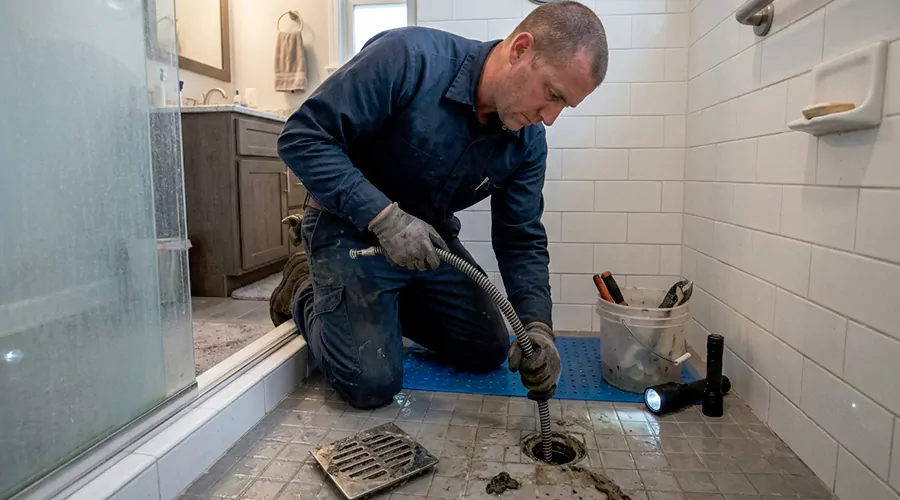
A clogged shower drain is best fixed by locating the blockage first and then removing it mechanically. Professional drain cleaning costs about $147 to $352 in 2026 with a national average near $246. Repeated clogs need diagnosis because clearing only the upper layer can leave a deeper restriction behind. This article focuses on fixing the cause rather than simply getting standing water to disappear once.
Why Is Your Shower Drain Clogged?
Hair is the leading cause of shower drain blockage. Soap residue can bind hair into a stronger mass. Body products containing oils can add sticky buildup while hard-water minerals can narrow the pipe further.
- A foreign object is less common.
- Another possibility is a deeper drain restriction.
- That becomes more likely when other fixtures also drain poorly.
- A simple shower clog usually affects the shower first.
- A wider plumbing problem tends to create symptoms elsewhere.
Diagnosis should therefore begin before any drain product is poured into the opening.
What Type of Clog Do You Have?
The behavior of the water can help locate the obstruction. Slow water often points toward a partial clog. Standing water indicates a tighter restriction. A shower that backs up when another fixture runs may have a deeper drainage problem.
| Drain Behavior | Likely Problem | First Check | 2026 Cost Exposure |
|---|---|---|---|
| Slightly slow | Early hair buildup | Drain cover | Often DIY |
| Pools during shower | Partial clog | Hair tool | Low tool cost |
| Does not drain | Dense blockage | Plunger or snake | $147 to $352 |
| Other fixtures react | Shared drain issue | Deeper diagnosis | Can cost more |
DIY plungers and simple snakes can cost less than $20. Professional shower-drain clearing averages around $250 in current 2026 guidance. The key is to match the tool to the depth of the blockage.
What Are the Warning Signs of a Deeper Clog?
A deeper blockage usually causes more than one symptom. The shower may drain slowly even after visible hair has been removed. Gurgling and recurring backups also suggest that the obstruction is not limited to the drain cover.
- Visible hair removal does not improve drainage.
- Standing water returns during the next shower.
- The drain gurgles while another fixture is used.
- The shower backs up when a sink drains.
- Another bathroom fixture becomes slow.
- A hand snake repeatedly meets resistance deeper in the pipe.
- The drain smells like sewage.
- Water contains dirty material when it backs up.
- The problem returns within days.
- Water stops moving completely.
Multiple slow drains can indicate a main-line problem rather than an isolated shower clog. That distinction matters because stronger DIY attempts at the shower opening may not reach the actual obstruction.
How Do You Check the Drain Before Repairing It?
Remove the drain cover and inspect the opening with a flashlight. Most shower clogs begin close enough to the surface that hair can be seen or reached with a simple tool.
- Wear waterproof gloves.
- Remove the grate carefully.
- Look directly below the opening.
- Check the crossbars for wrapped hair.
- Pull loose material upward.
- Do not push it farther down.
The keyword clean shower drain fits this first-stage maintenance step. If water immediately starts moving after the debris is removed you have already identified much of the problem. If nothing changes the obstruction is likely deeper.
How Do You Fix a Hair Clog?
Physical removal is the direct fix for a hair-based blockage. A flexible plastic strip can catch strands several inches below the drain cover. Needle-nose pliers can help when hair is visible near the opening.
- Insert the hair tool slowly.
- Rotate it slightly.
- Pull upward.
- Dispose of the material in the trash.
- Repeat until little debris comes back.
- Run warm water afterward.
Current 2026 drain guidance identifies visible hair removal as the first useful step before moving to stronger tools. A surprising amount of material can fit beneath a small shower grate. Do not assume the opening is clear after removing only the first visible clump.
When Should You Use a Plunger?
Use a cup plunger when the obstruction sits beyond finger reach but the problem still appears limited to the shower. A good seal lets alternating pressure work against the blockage.
- Remove the drain cover if possible.
- Place the plunger over the opening.
- Add enough water to cover the edge.
- Press downward.
- Pull upward without breaking the seal.
- Repeat several times.
- Watch the standing water.
Plunging is listed as a practical DIY method for shower clogs with standing water. Drainage that suddenly improves means the blockage moved. You should still run water for several minutes before deciding that the repair is complete.
When Should You Snake the Drain?
Use a drain snake after shallow hair removal and plunging fail. The snake reaches material farther into the waste pipe. It is especially useful when hair has collected deeper than a plastic strip can reach.
- Feed the cable slowly.
- Stop when resistance changes.
- Rotate the handle.
- Advance a little farther.
- Retract the cable carefully.
- Remove debris from the end.
The supplied keyword snaking a drain represents a high-volume related query. Do not push aggressively. The goal is to capture or break apart the obstruction without damaging pipe connections. Current guidance recommends testing with hot water after the snake is withdrawn.
What If the Drain Still Runs Slowly?
A drain that improves but remains slow may still contain material along the pipe wall or deeper in the trap. One successful water test does not prove that the full pipe opening has been restored.
- Run the shower for several minutes.
- Watch whether the puddle grows.
- Turn the water off.
- Time how quickly the remaining water disappears.
- A clear drain should keep up with normal flow.
- Repeated slow drainage suggests incomplete removal.
This is where a clogged drain pipe becomes more plausible than a small obstruction directly beneath the grate. A deeper manual snake may help when the problem remains isolated to the shower.
Can Hard Water Contribute to the Problem?
Minerals in hard water can collect inside drainage piping. Scale creates a rougher surface where hair and soap residue can catch. The mineral buildup alone may not create a sudden blockage but it can make recurring clogs easier to form.
- Look for mineral scale around the drain opening.
- White deposits can suggest hard-water residue.
- Do not scrape finished surfaces aggressively.
- Removing hair remains the main priority.
Repeated mineral accumulation may require a different maintenance approach than a one-time hair clog. The condition of the pipe matters as much as the material entering it.
Should You Use a Chemical Drain Opener?
Chemical drain opener should be treated as a later option rather than the default fix. Hair is often easier to remove physically and chemical liquid can remain in standing water if the blockage does not move.
- Read the complete product label.
- Use only the stated amount.
- Never mix different drain chemicals.
- Never add bleach to drain opener.
- Wear eye protection.
- Do not immediately use a snake in chemical-filled water.
The supplied keyword best drain unclogger belongs to the broader drain category. A product can sometimes move organic material. It cannot correct broken piping or a deeper shared-drain problem.
How Do You Confirm the Repair Worked?
A shower-drain fix is successful when the drain handles normal shower flow for several minutes without an expanding puddle. This test matters because small openings can drain low-flow water yet fail during actual use.
- Start with low water flow.
- Watch the drain for one minute.
- Increase to normal shower flow.
- Continue the test.
- Look for pooling.
- Turn the water off.
The remaining surface water should disappear promptly. Repeat the test later that day if the clog was severe. A repair that lasts only a few hours usually means some obstruction remains.
When Should You Call a Professional?
Professional drain cleaning is appropriate when mechanical DIY methods fail or the clog quickly returns. Multiple affected fixtures are an even stronger reason because the restriction may sit beyond the shower branch.
Professional drain cleaning costs $147 to $352 in 2026. The average is about $246. Main sewer clog repair averages $380 when the obstruction lies farther downstream.
Consider professional diagnosis when:
- Several drains are slow.
- Sewage enters the shower.
- A snake cannot restore flow.
- The obstruction returns within days.
- Water backs up when another fixture runs.
- The problem appears beyond the reach of household tools.
A damaged shower drain itself is a different repair. Current 2026 drain replacement pricing averages about $700 with a reported range of $500 to $1,020.
How Do You Prevent the Clog From Returning?
A drain screen catches hair before it reaches the pipe. Clean the screen frequently because a clogged screen can mimic a slow drain even when the pipe below remains clear.
- Remove hair after each shower when practical.
- Clean the drain cover regularly.
- Watch for the first sign of slow water.
- Avoid sending solid material into the shower.
- Use hot water during routine drain cleaning.
- Inspect recurring clogs instead of repeatedly treating them.
The goal is to stop the hair before it enters the pipe. That simple habit costs far less than repeated drain cleaning.
Conclusion
Knowing how to fix a clogged shower drain means correcting the blockage rather than making the water disappear once. Start with visible hair and then test the flow. Use a plunger for a deeper obstruction. Move to a drain snake when needed. If the clog returns or other fixtures become slow, the restriction may be farther downstream. This week, clean the drain cover and install a hair-catching screen.
Frequently Asked Questions
Why is the shower still slow after removing hair?
More material may remain deeper in the trap or waste pipe. A drain snake can reach farther than a surface hair tool.
Can a shower drain clog overnight?
A blockage usually develops gradually. A loose mass of hair can shift suddenly and close the remaining opening.
Can shampoo clog a shower drain?
Product residue can contribute to buildup. Hair remains the stronger physical framework for many shower clogs.
Why does the clog keep coming back?
The original obstruction may not be fully removed or the drain may have a deeper restriction.
Can a shower clog affect a toilet?
A deeper shared-drain blockage can affect several fixtures. An isolated hair clog beneath the shower normally does not.